


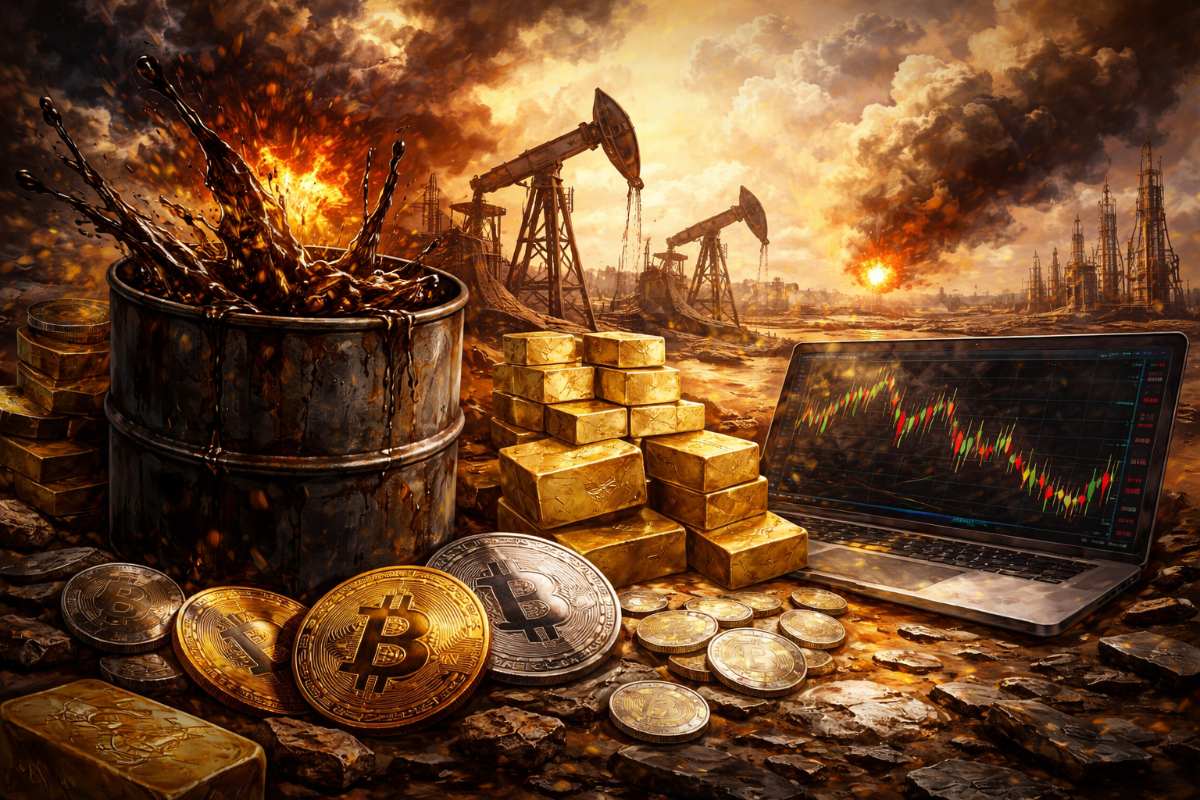
Energy-driven volatility is once again rippling across global markets, as rising geopolitical tensions push oil prices higher and force investors to reassess risk across asset classes. With Brent crude climbing toward multi-month highs amid renewed threats to key supply routes in the Gulf, energy markets are emerging as the dominant macro signal shaping capital allocation decisions. Bitcoin fell below $69,000, down 7% in the last week. Gold also registered its worst week since 1983.
The latest leg up in oil prices reflects growing concerns over potential disruptions around critical chokepoints such as the Strait of Hormuz, through which a significant portion of the world’s crude supply flows. Even the possibility of prolonged instability in the region has been enough to lift inflation expectations, complicating the outlook for central banks that had been inching toward policy easing.
Energy Crisis Ripple Through Cross Asset Class
This shift is now feeding directly into cross-asset repricing. Traditionally, periods of geopolitical stress tend to trigger a broad flight to safety, benefiting assets such as gold and government bonds. However, recent market behavior suggests a more nuanced response. Gold and silver initially rallied on the headlines but quickly gave back gains, pointing to profit-taking and tighter liquidity conditions rather than sustained safe-haven demand.
Higher oil prices are playing a central role in this divergence. As energy costs rise, they feed into inflation expectations and push real yields higher, reducing the relative appeal of non-yielding assets like gold. At the same time, uncertainty around how policymakers will respond is limiting conviction across markets, leading to selective positioning rather than a synchronized move into defensive assets.
Cryptocurrency markets are reflecting similar dynamics. Bitcoin has pulled back from recent highs, with price action indicating sensitivity to the same macro forces influencing traditional assets. Rather than acting as an uncorrelated hedge, digital assets continue to trade in line with broader liquidity conditions, particularly during periods of heightened geopolitical risk.
The decline in crypto prices has been exacerbated by deleveraging across derivatives markets, where liquidations have amplified downward moves. Ethereum and other major tokens have followed a similar trajectory, underscoring how tightly the sector remains linked to global risk sentiment. For now, crypto’s role appears less about safe-haven demand and more about its position within the broader spectrum of risk assets.
What sets the current environment apart is the central role of energy in driving market narratives. Oil is no longer just a sector-specific variable but a key input into inflation, monetary policy expectations, and ultimately, asset pricing across the board. As a result, movements in crude are having an outsized impact on everything from equities to commodities to digital assets.
Looking ahead, much will depend on how geopolitical risks evolve and whether energy markets stabilize. A sustained rise in oil prices could further delay rate cuts and tighten financial conditions, prolonging pressure on both traditional and digital assets. Conversely, any easing of tensions could help restore confidence and support a rebound in risk appetite.
For now, markets remain in a state of recalibration. Energy-led volatility is forcing investors to navigate a more complex landscape, where traditional correlations are breaking down and macro signals are shifting rapidly. In this environment, oil has reasserted itself as the key driver, with its influence extending far beyond the energy sector into the core of global financial markets.


