


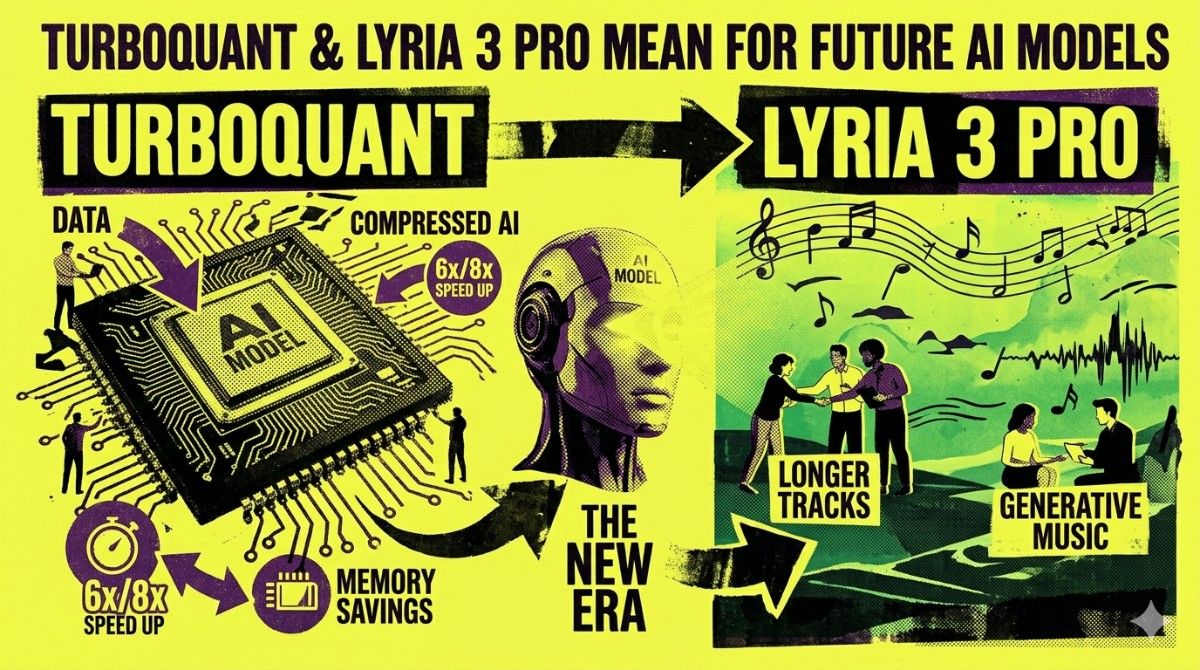
Google has unveiled TurboQuant, an AI memory compression algorithm that is generating buzz online, with many referencing the fictional Pied Piper from HBO’s “Silicon Valley.” This new technology promises impressive memory-shrinking capabilities, potentially reducing AI’s working memory by up to six times. However, it remains a lab experiment at this stage, and no public release date has been provided.
Alongside TurboQuant, Google also launched Lyria 3 Pro, an upgraded music generation model. This version aims to enhance the user experience by generating longer and more customizable tracks. As Google rolls out this AI music technology across its Gemini platform and other enterprise products, the company continues to expand its presence in the music AI space. Both announcements represent Google’s commitment to pushing the boundaries of AI applications.
AI Boom Surges as Harvey Hits $11B Valuation
AI advancements are driving changes across numerous sectors. In legal tech, startup Harvey confirmed its remarkable $11 billion valuation, attracting heavy investments from firms like Sequoia and Andreessen Horowitz. The rush of investment underscores the growing interest in AI applications in this space, as investors look to capitalize on the excitement surrounding AI-driven solutions.
TurboQuant’s potential impact on AI models may not be fully realized until it moves beyond the lab. The market seems eager for breakthroughs that enhance processing efficiency. By significantly streamlining working memory, TurboQuant could reshape how AI systems handle complex tasks. The references to Pied Piper highlight the cultural intersection between technology and media, showcasing how innovations resonate with broader narratives.
As Google continues to develop technologies like TurboQuant, the implications for businesses and consumers are considerable. Market analysts are keenly observing the rollout of these tools. If TurboQuant proves to be effective, it could lead to more efficient AI models that are capable of running on less hardware, making AI tools more accessible to various industries.
Lyria 3 Pro Jumps in AI Music Race
The launch of Lyria 3 Pro further illustrates Google’s strategy to integrate AI deeply into the creative process. By enabling longer and more customizable music tracks, the model could cater to a wider array of applications, from advertising to personal playlists. Incremental improvements in music generation may offer new pathways for content creators and businesses alike.
With Harvey’s hefty valuation, AI’s role in the legal sector is becoming more pronounced. The startup’s focus on applying AI to streamline legal work is attracting attention and capital. This trend signifies a strong belief among investors in the transformative power of AI in traditional industries. As companies like Harvey thrive, expect to see rapid developments in how legal services are delivered.
The juxtaposition of Google’s innovative projects with Harvey’s robust valuation suggests a landscape ripe for disruption. Both tech and legal industries are now under the spotlight as they adapt to the influx of AI capabilities. Industry insiders emphasize that this growth phase could shift the competitive balance within these sectors, as those who embrace AI stand to gain a significant edge.
The progression of AI tools like TurboQuant and Lyria 3 Pro—and the financial success of startups like Harvey—reflects a larger trend in technology adoption. The excitement around these advancements resonates across social media, not only shaping narratives but also fostering community discussion. The humor surrounding TurboQuant’s nickname, “Pied Piper,” echoes a desire to humanize and complicate technical advancements, bridging the gap between tech and everyday life.
As these technologies develop further, the market will likely continue to react strongly. Companies are on edge, assessing how to implement AI effectively without falling behind. Ongoing funding rounds and innovations suggest that investors believe in AI’s potential to disrupt established practices.
Despite the promise of these developments, uncertainty remains. For TurboQuant, scalability remains a question mark. For Lyria 3 Pro, the market will need to test its capabilities. Harvey’s valuation shows a strong vote of confidence, but the sustainability of such massive growth in legal tech remains to be seen.
In conclusion, Google’s latest AI innovations alongside Harvey’s explosive growth signal a transformative period in both tech and traditional sectors. Both the entertainment industry and legal services seem poised to leverage AI more dynamically, reshaping the landscape for future technologies. As these stories unfold, the industries involved will need to adapt quickly to the changes that AI brings.


